

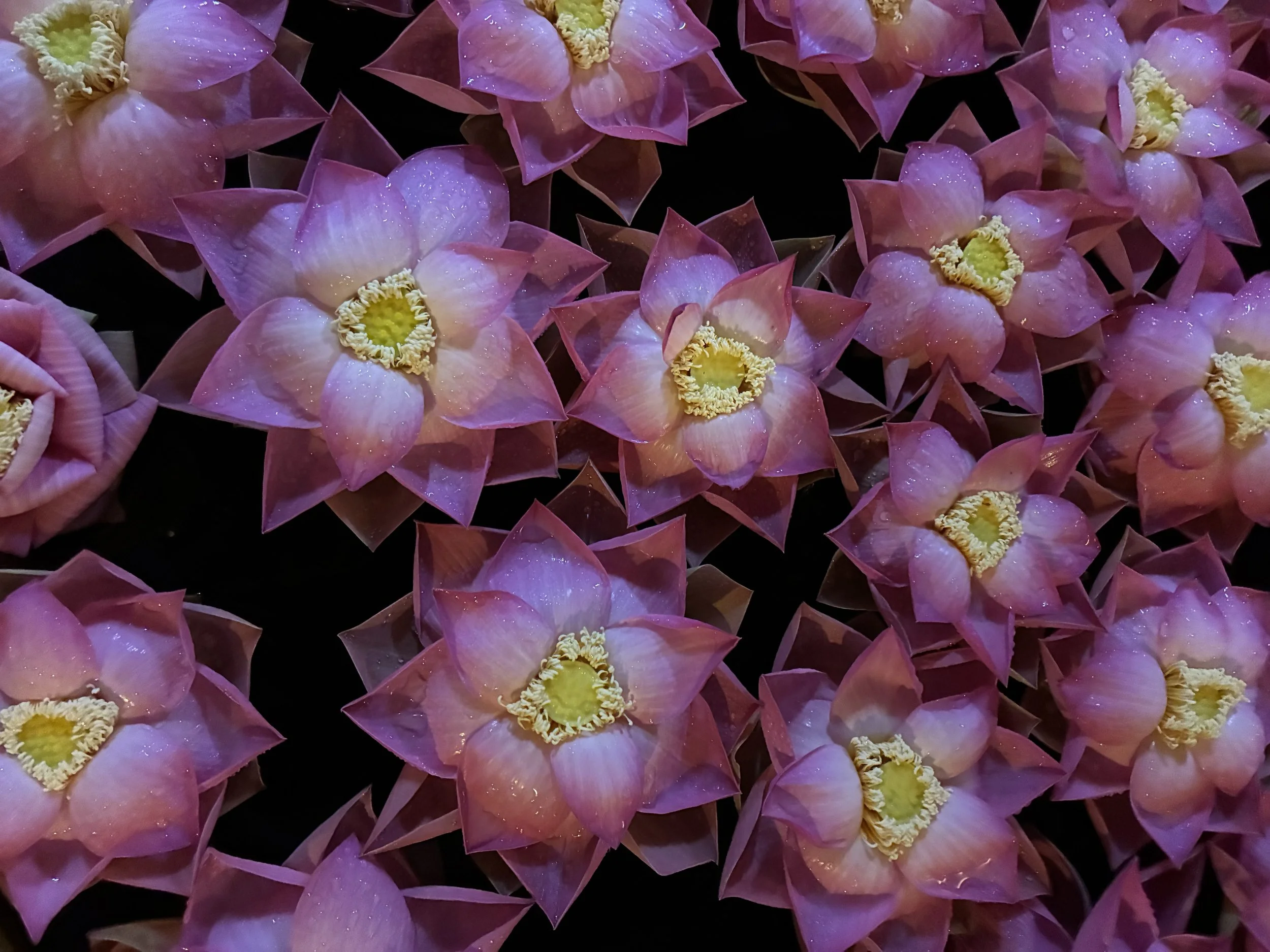
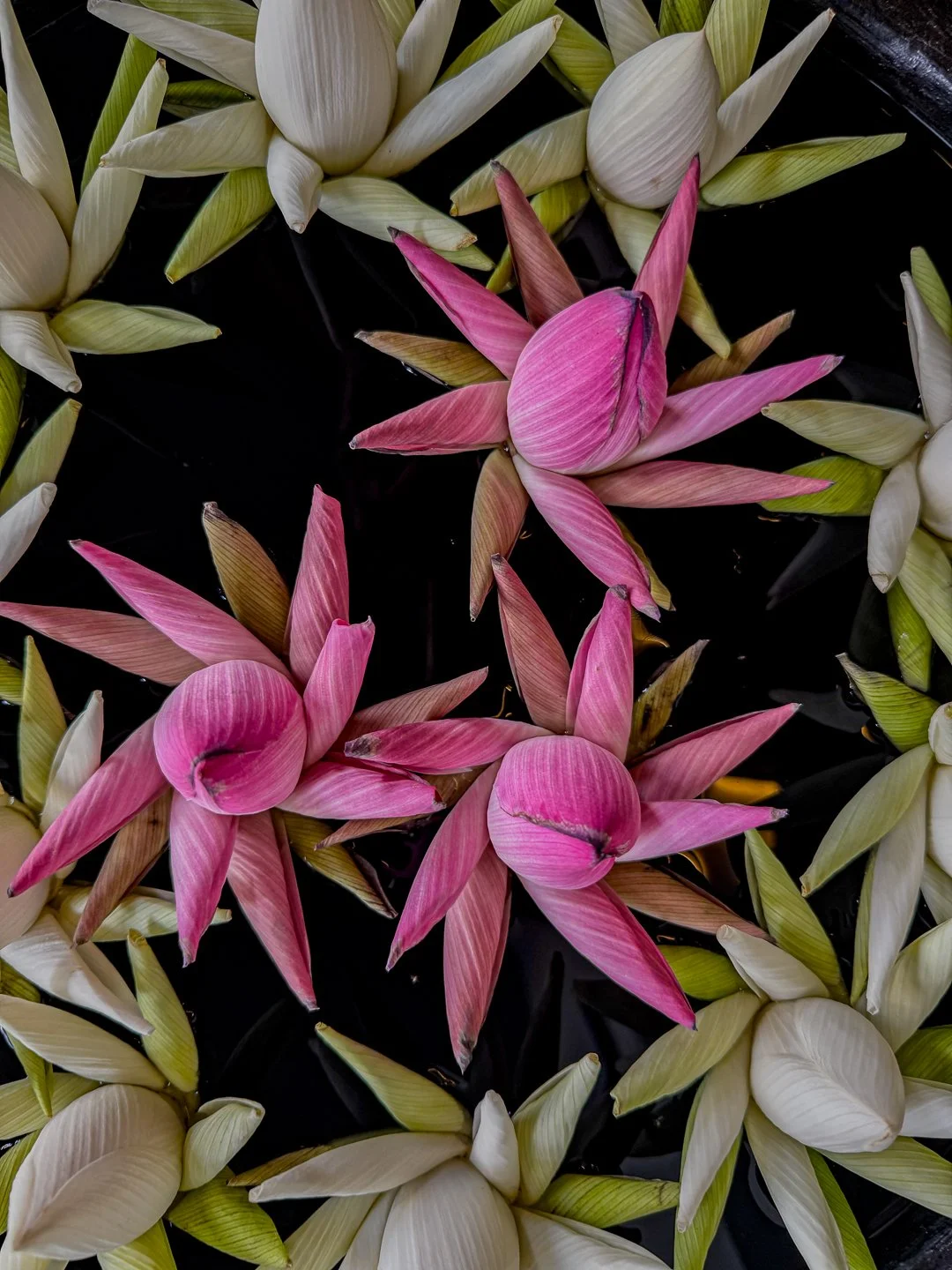
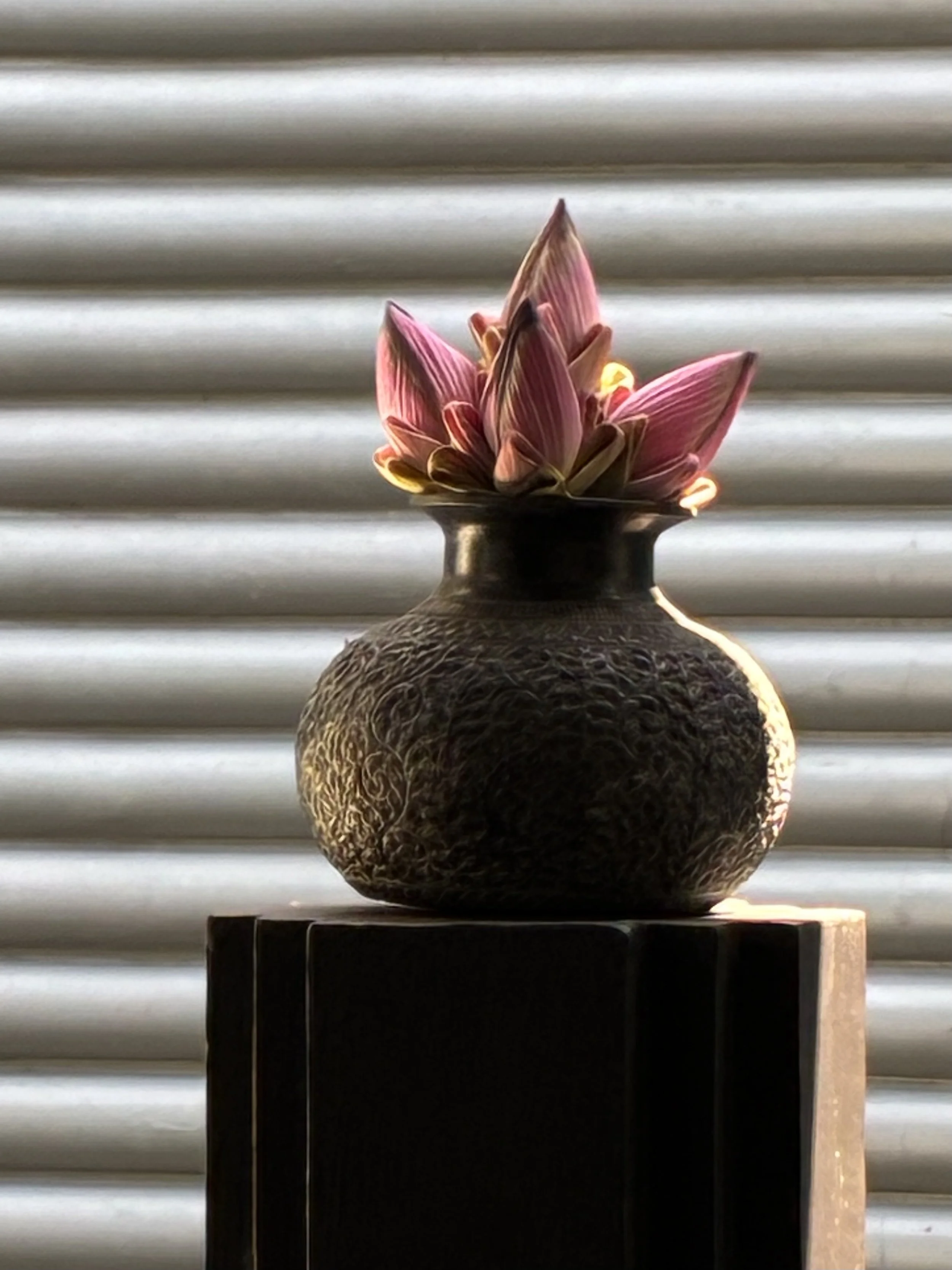
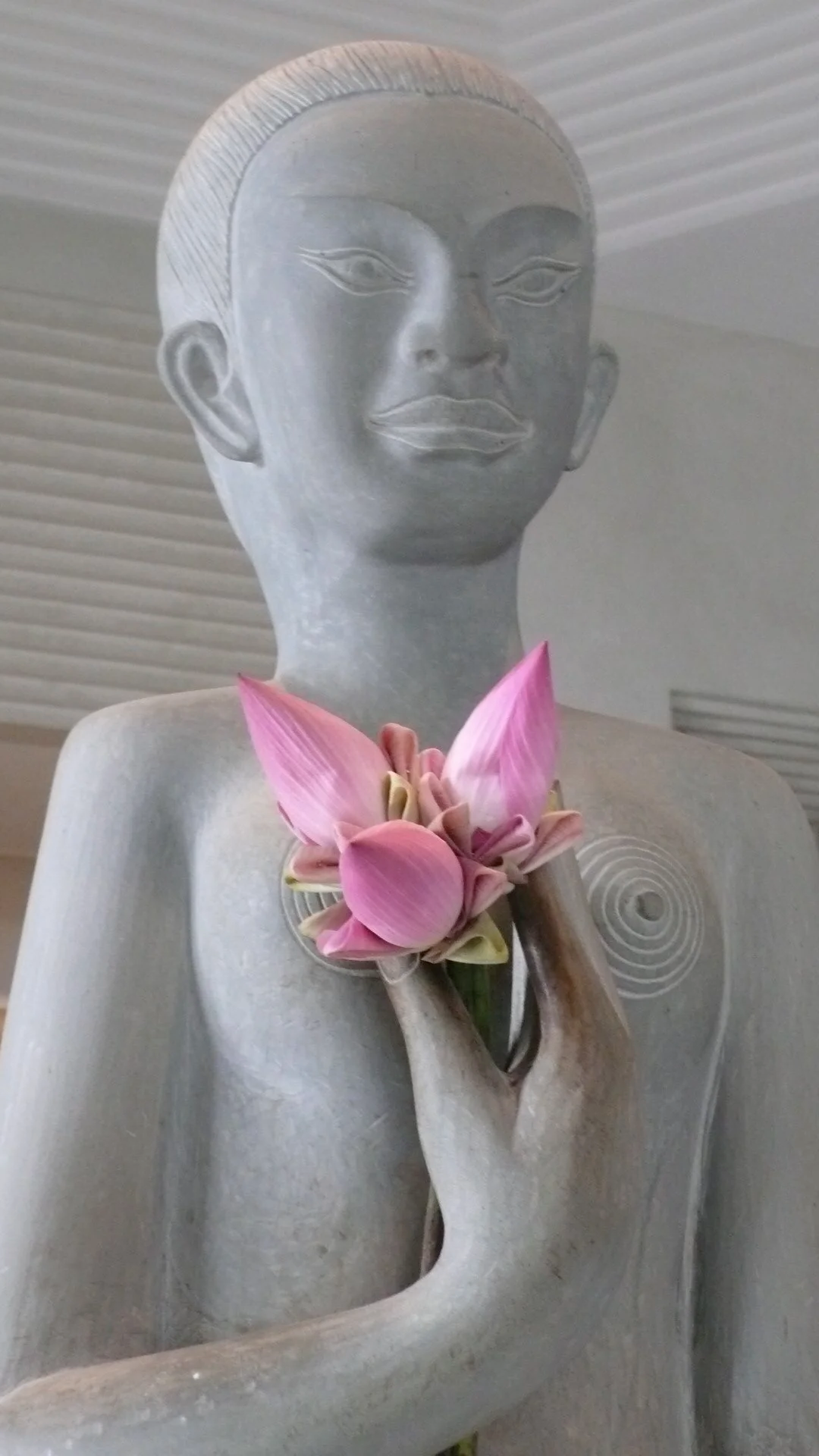
Folded lotus flowers greet travellers in lobby of a hotel in Bangkok.
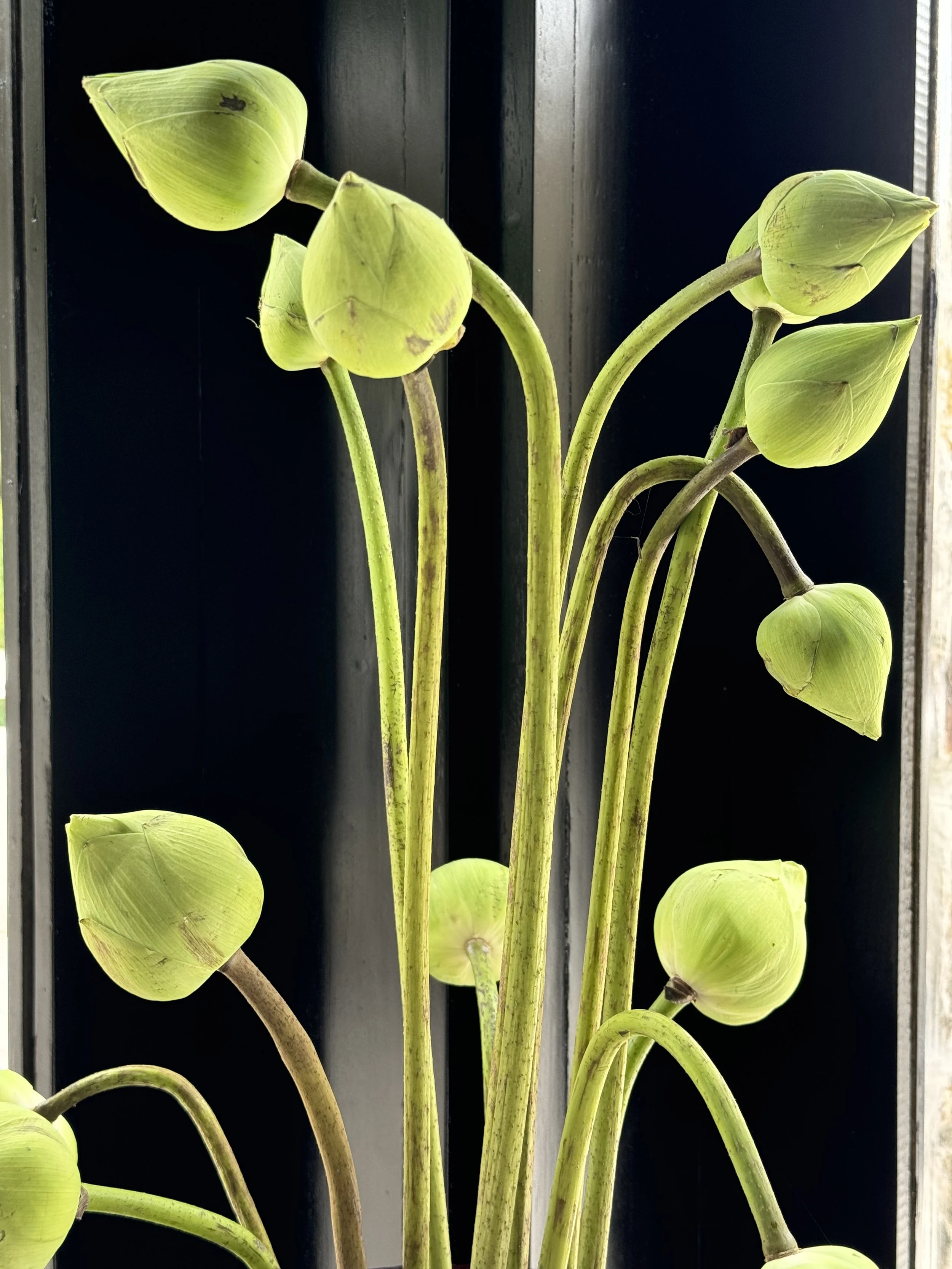
Few flowers have captured Asia's imagination like the lotus. Rising from muddy waters into delicate bloom, it symbolises purity, enlightenment, renewal and spiritual awakening. Its symbolism reflects how it grows: rooted in mud, the lotus rises through water and opens above the surface, often untouched by the dirt below.Its beauty inspires paintings, sculpture, architecture, religious ceremonies across Asia. From India's and Cambodia's temples to Japan's gardens, Vietnam's waterways and Thailand's gilded shrines, the lotus is more than ornamental, it represents a metaphor for spiritual growth, grounded in the world yet aspiring higher. In Buddhism, the flower represents enlightenment and perhaps nowhere is its architectural significance more spectacular than at Angkor in Cambodia. The great Khmer temples, including Angkor Wat and the Bayon, incorporate lotus-inspired forms into their towers, carved decorations and stone ornamentation.
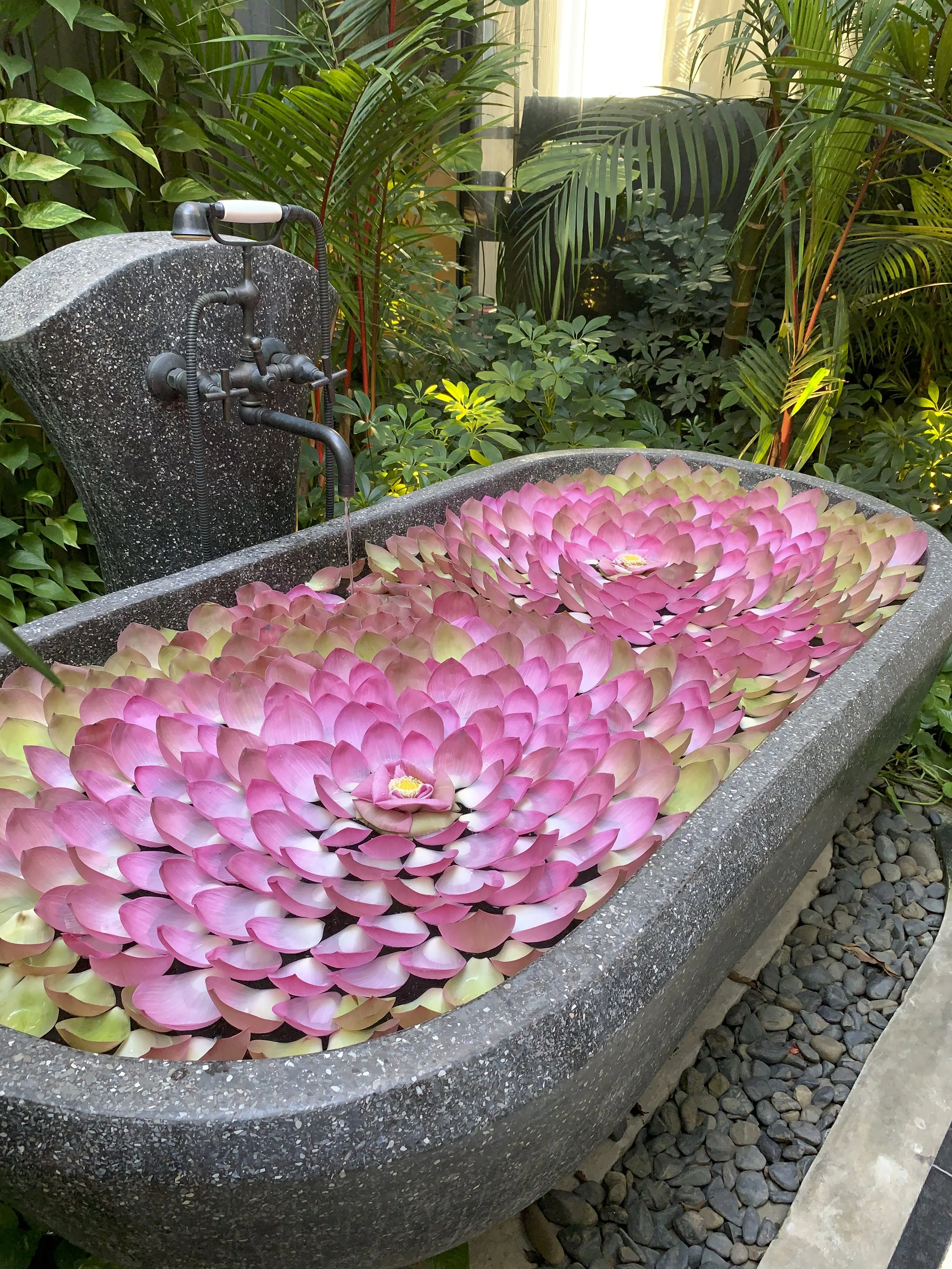
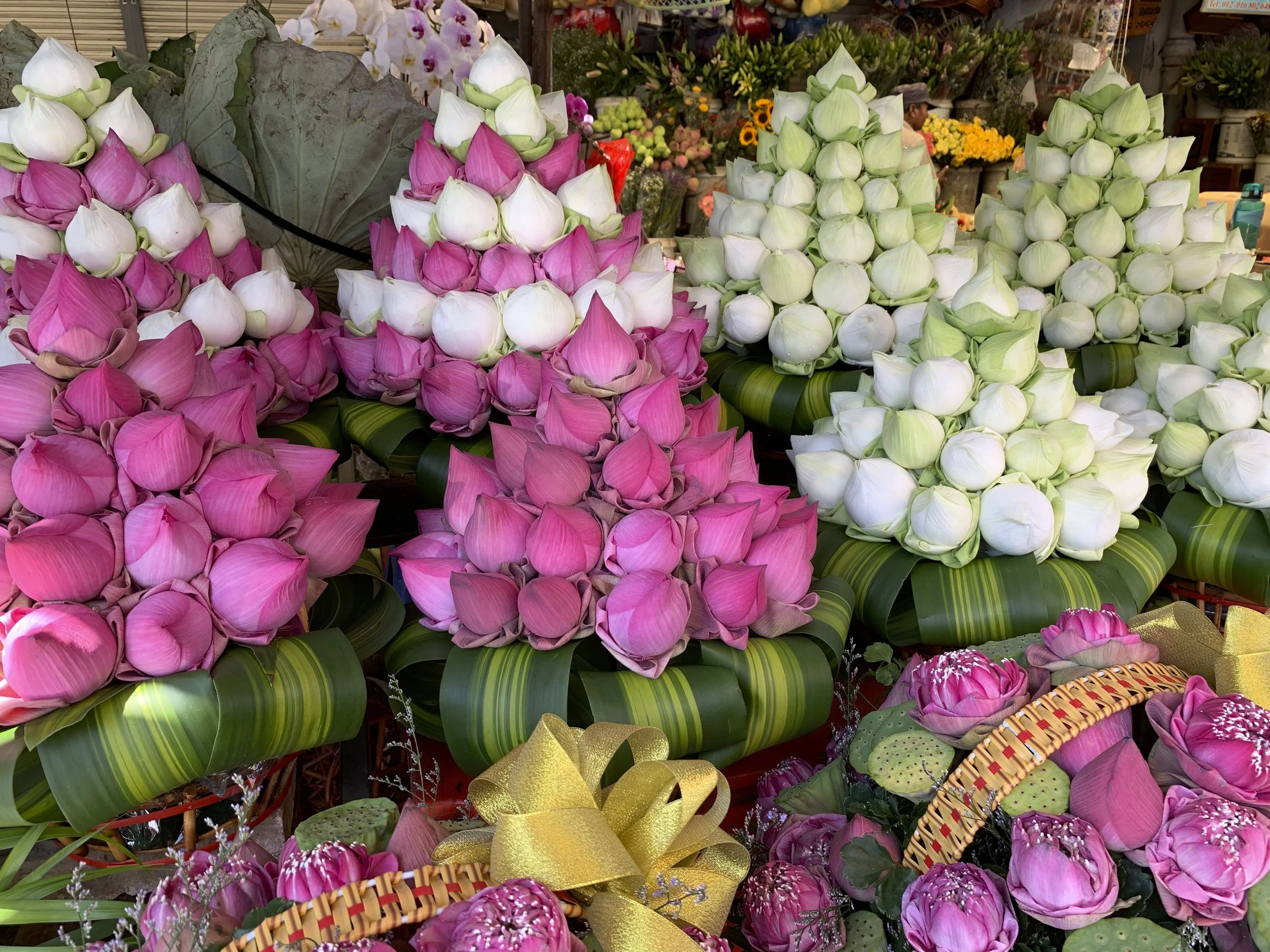
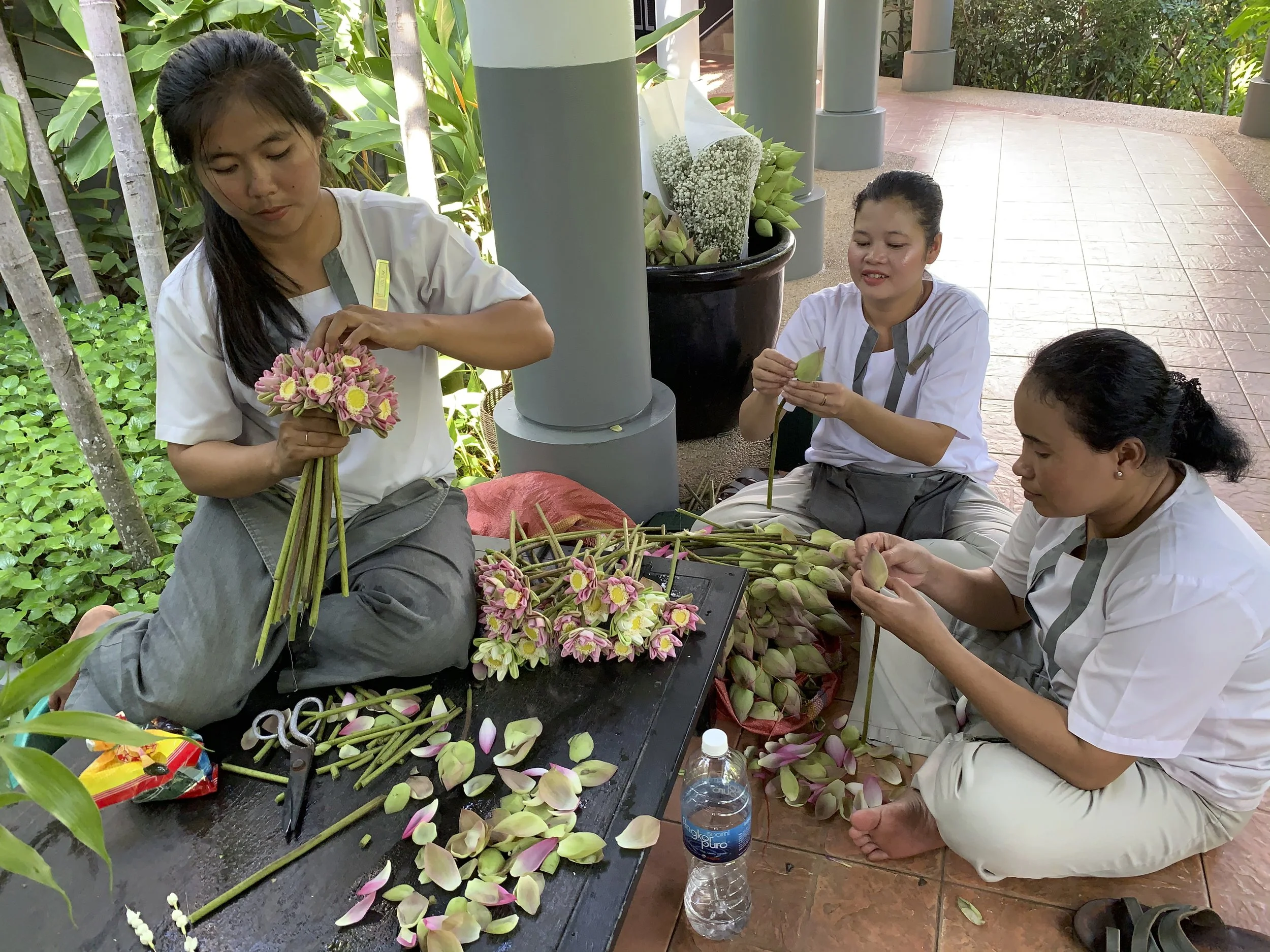
Walk into a Buddhist temple in Asia in the early morning and there is a good chance of seeing worshippers carrying freshly gathered lotus flowers. Some are held carefully in the hands, while others are folded or arranged into small offerings and placed before Buddha images. Beyond its religious use, the flower remains part of everyday Asian life. It is presented at weddings, used in traditional festivals, incorporated into floral arrangements and given as a gesture of respect. The flower's importance is not confined to temples, galleries but also incorporated into design in luxury hotels. The lotus plant is also valued for its culinary use. Its seeds are eaten fresh, dried or incorporated into sweet soups and desserts, particularly in Vietnam, China and Thailand. Lotus root, with its distinctive pattern of holes, is used in stir-fries, soups and salads. The leaves can wrap rice and other foods, imparting a subtle fragrance during cooking.
Perhaps that is the real magic of the lotus: it is simultaneously a flower of the gods, and an object of artistic inspiration and this magical flower remains one of Asia's most beautiful expressions of life, spirituality and enduring elegance.
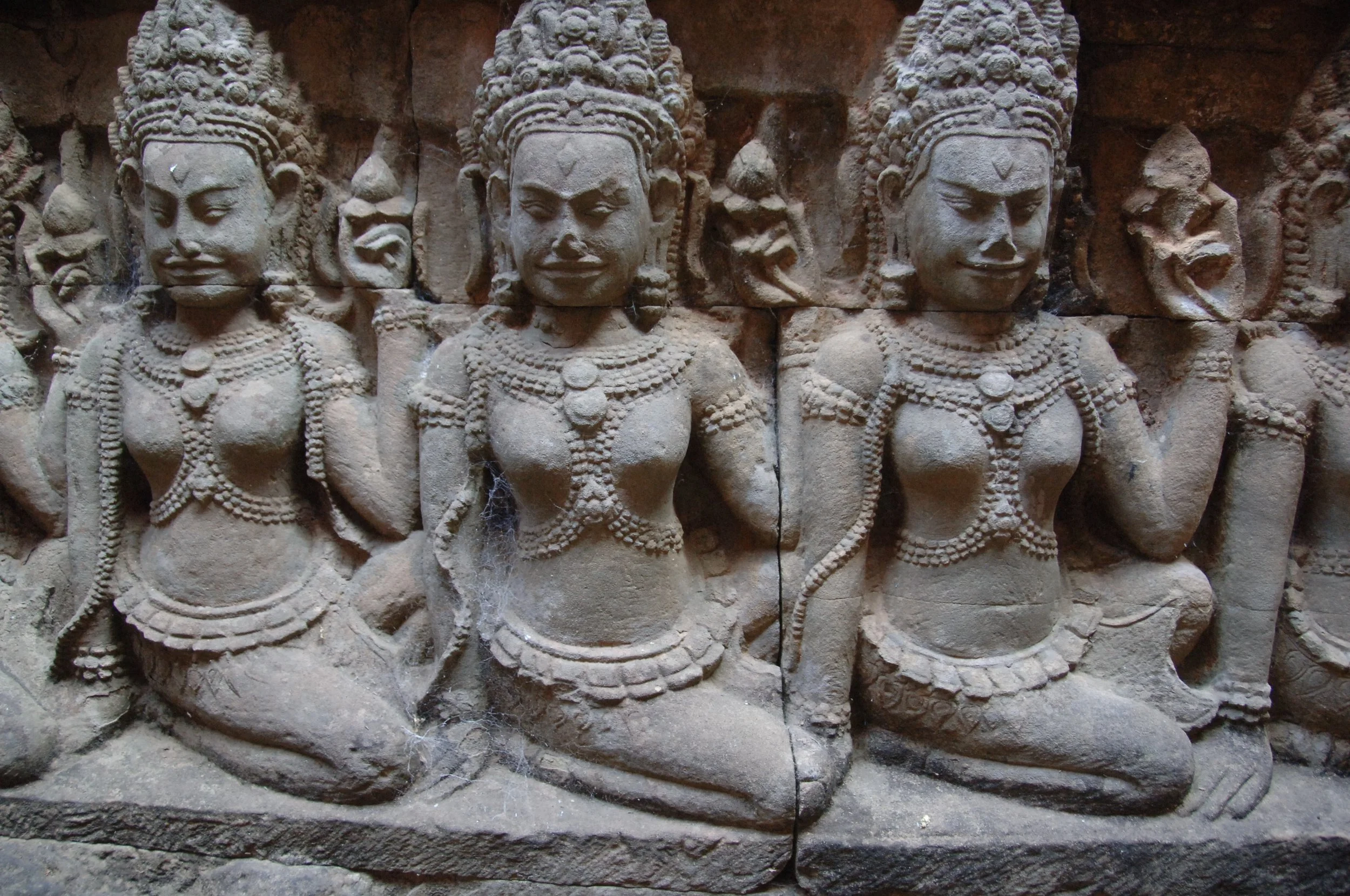
Carved into the gallery walls and sanctuaries, celestial goddesses are shown holding lotus stems or buds with delicate hand gestures— pinching the stem with the middle and ring fingers.
LITTLE KNOWN FACT:
Lotus seeds have an extraordinary lifespan and can remain dormant for centuries before sprouting; scientists successfully germinated a viable lotus seed that was roughly 1,300 years old.
BEST TIME TO SEE FLOWERS
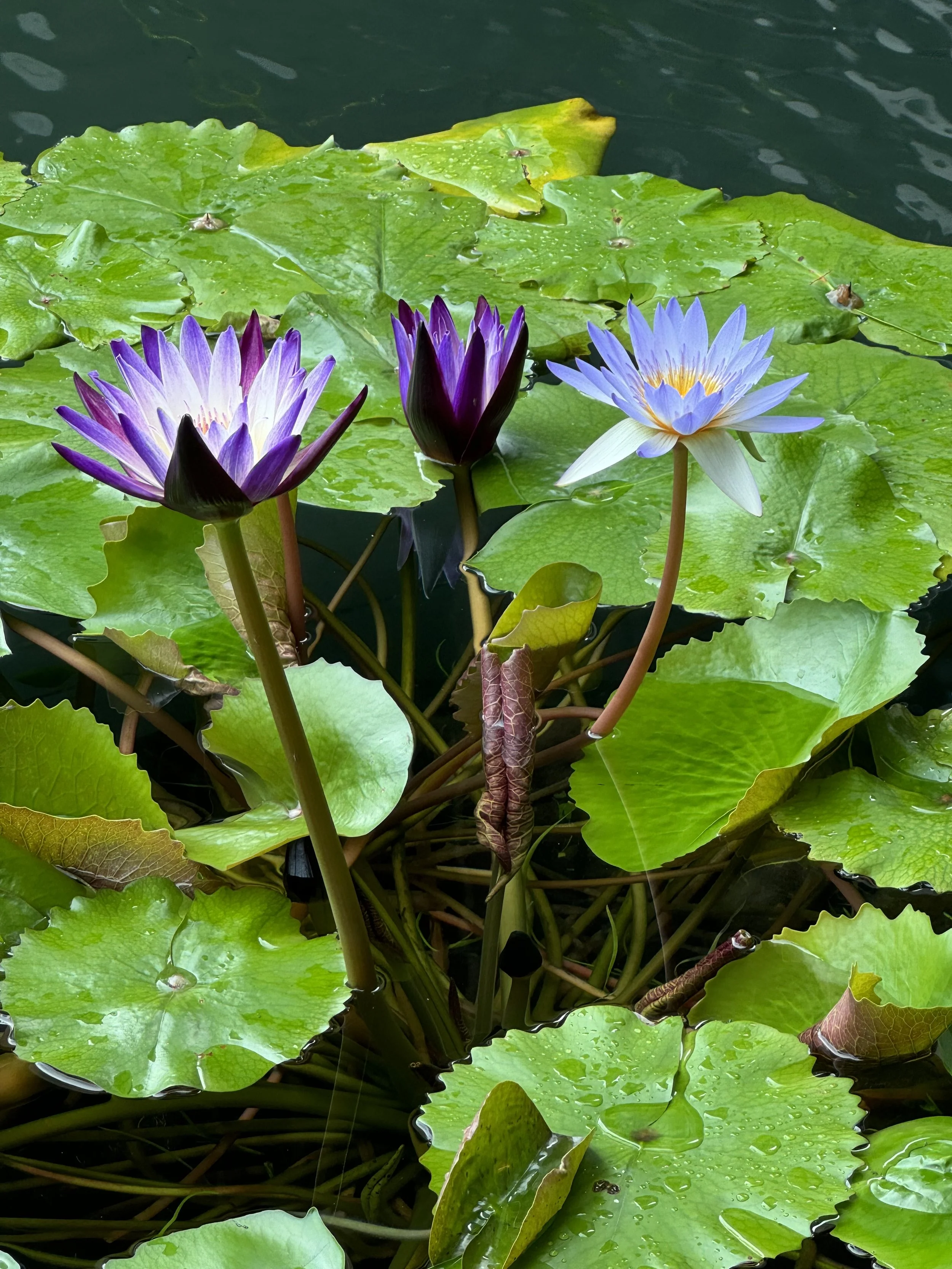
Individual lotus flowers last only about 3 to 5 days. They open in the early morning light (typically peaking between 6:00 AM and 10:00 AM).
Longitude 80 offers private Asia family departures featuring classic and remote destinations across Asia.